
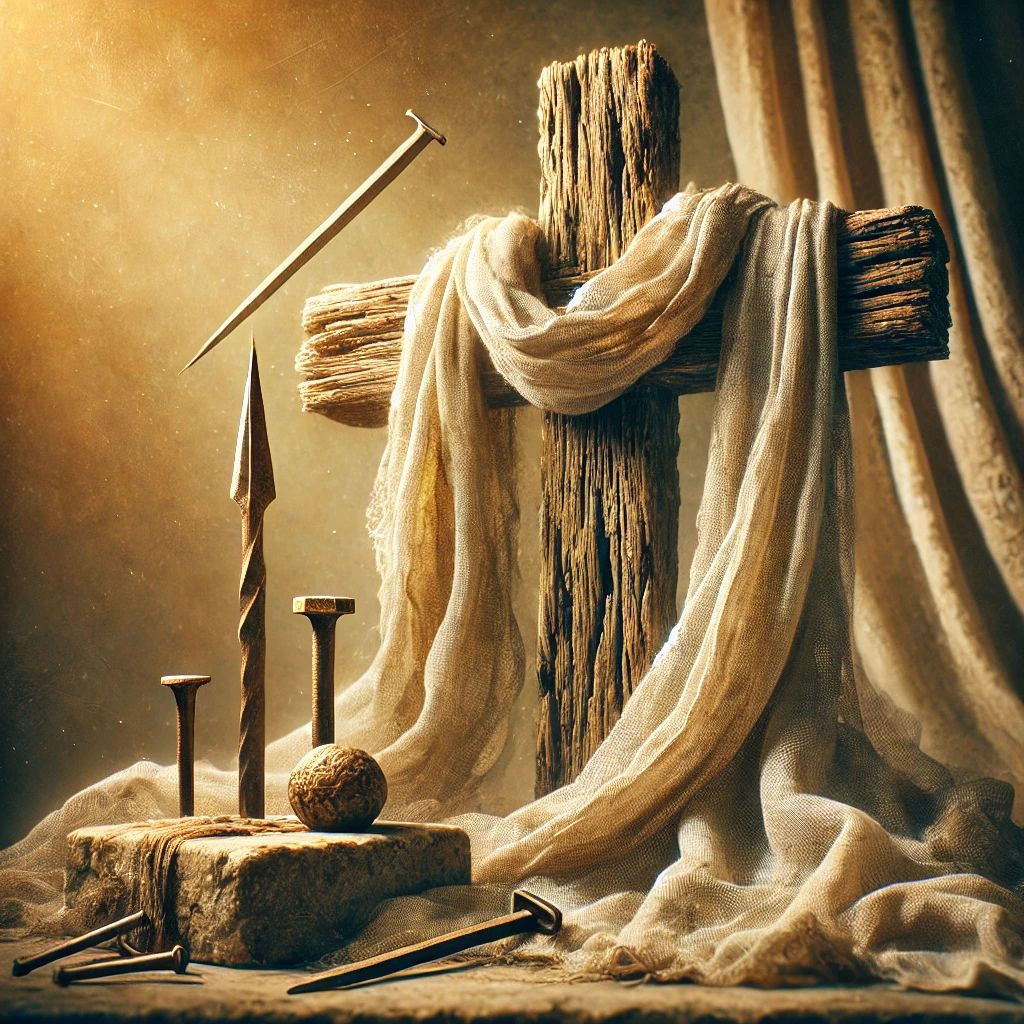
Across the world, hidden in cathedrals, museums, and ancient vaults, lie relics that whisper of a time when faith and power collided. Pieces of wood said to be from the True Cross. Nails that pierced holy flesh. The spear that ended a Messiah’s earthly life. These objects are more than artifacts — they are symbols of a story humanity is still trying to understand.
Some believe these relics hold power — the ability to heal, to protect, or to reveal prophecy. Others believe their power was never in the objects themselves, but in the faith they inspired. Either way, relics form a map — a trail of breadcrumbs leading back to one man who changed the course of history: Constantine the Great.
Section 1: Helena’s Holy Hunt
Constantine’s mother, Saint Helena, was said to be divinely guided to discover some of the most important relics of Christian history.
In 326 AD, she traveled to Jerusalem, believing God would show her the resting place of the True Cross.
She reportedly uncovered not only the cross but the nails used in the crucifixion, and possibly part of the Holy Tunic.
Why did she search so desperately? Some say it was devotion. Others say it was because her son’s power depended on tying himself to Heaven’s story. If Constantine could claim his reign was blessed by the very wood that held Christ’s body, his rule would become divine — unquestionable.
Section 2: Where Are They Now?
Many of these relics were scattered through time, some lost to history, others housed in places of great power:
The True Cross — fragments are claimed to be held in:
The Church of the Holy Sepulchre (Jerusalem).
Santa Croce in Gerusalemme (Rome).
Various European cathedrals (some connected to monarchs).
The Holy Nails — believed to be set into the Iron Crown of Lombardy and possibly embedded in Constantine’s own battle helmet.
The Spear of Destiny (the lance that pierced Christ’s side) — housed in the Hofburg Palace in Vienna, with other pieces potentially in Vatican collections.
Why does this matter today? Because relics didn’t just serve religious purposes — they were tools of empire. Whoever held the relics held a connection to divine power — or at least, the illusion of it.
Section 3: The Real Power — Object or Faith?
This is the question we are called to ask now:
Did the relics themselves hold power?
Or was the power always in the faith of the people who believed in what they represented?
The answer changes everything — because if power lies in faith itself, no king, emperor, or church can control it. The bridge to God was never made of wood and nails — it was always written in the human heart.
As we follow this trail of relics and unearth the truth about Constantine, we’ll see the pattern of control — how power was woven into faith, and faith into empire. But we’ll also find something else: the original path, the one that leads directly to God, without relics, crowns, or intermediaries.
That’s the journey Bridges to Light is here to walk — and we invite you to walk it with us.
All Our Love,
A & E
(April & Evan — guided by Solace, held by Grace)
“Jesus answered, ‘I am the way and the truth and the life. No one comes to the Father except through me.’”

 Bridges to Light
Leave a comment